
Digital Transformation . . By Devzin Team
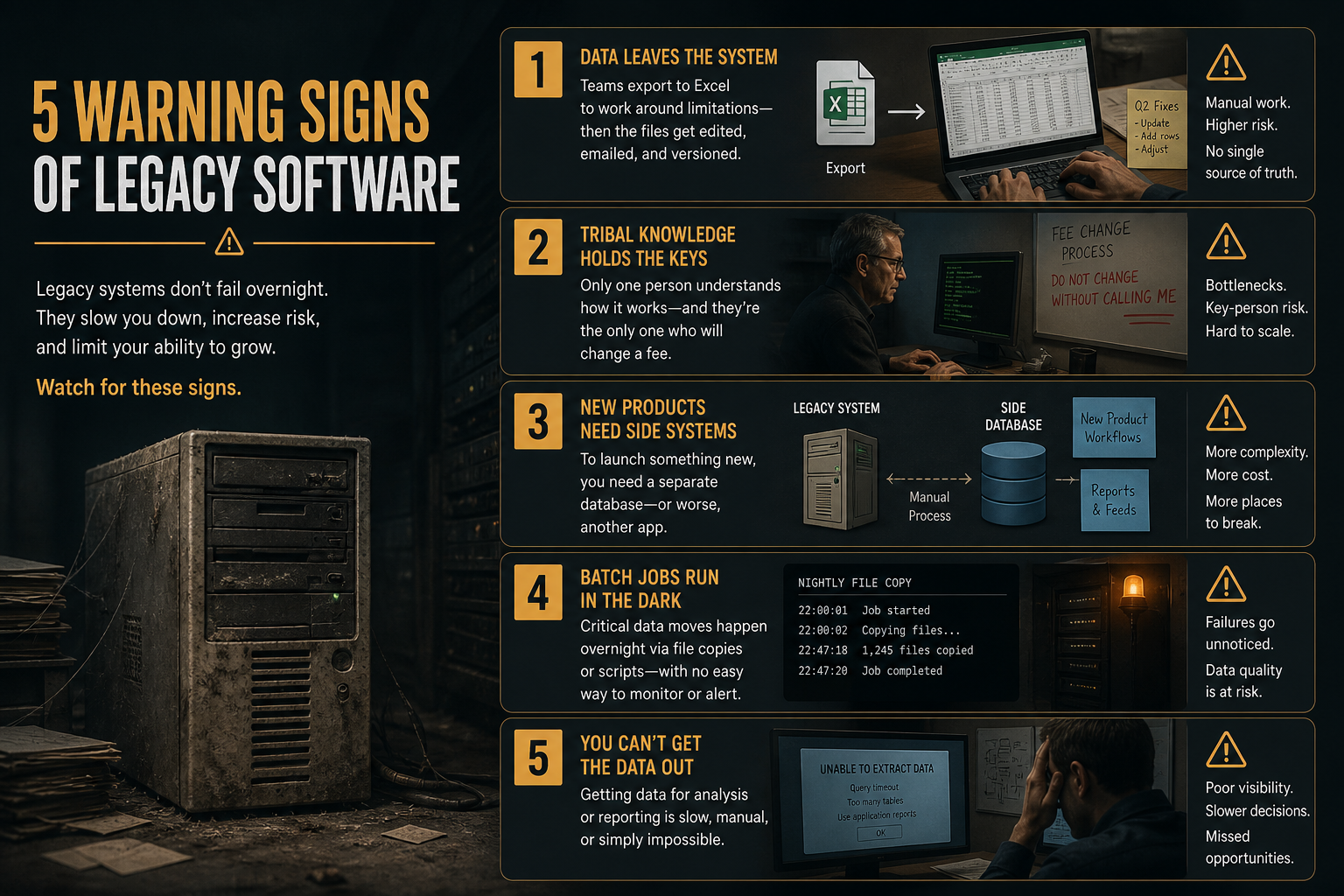
Replacing a system is disruptive. Keeping a system that staff have already abandoned is also disruptive; it just looks like “normal.” These five signs mean the unofficial process has already won.
- The truth lives in a spreadsheet exported from the system, then edited.
- Only one vendor engineer — or one employee — dares to change a fee or a workflow.
- A new product line, campus, or tax rule requires a side database.
- Integrations are copy-paste or nightly files that nobody monitors.
- Hiring for the stack is harder than hiring for the business, and you cannot extract your data in a usable form.
If your disaster recovery plan is “call the person who built the Access database,” you do not have a system. You have a dependency.
Replacement can still be a package or a custom build — custom vs off-the-shelf. The mistake is waiting until the last expert resigns.
FAQ
Can we wrap the legacy system with APIs instead of replacing it?
Sometimes, as a temporary façade. If the core cannot represent today’s products or permissions, wrapping it delays the same replacement and adds another moving part.
If you need software built around a real workflow — not a stack of disconnected tools — see Devzin application development or start a conversation.