

Business Technology . . By Devzin Team
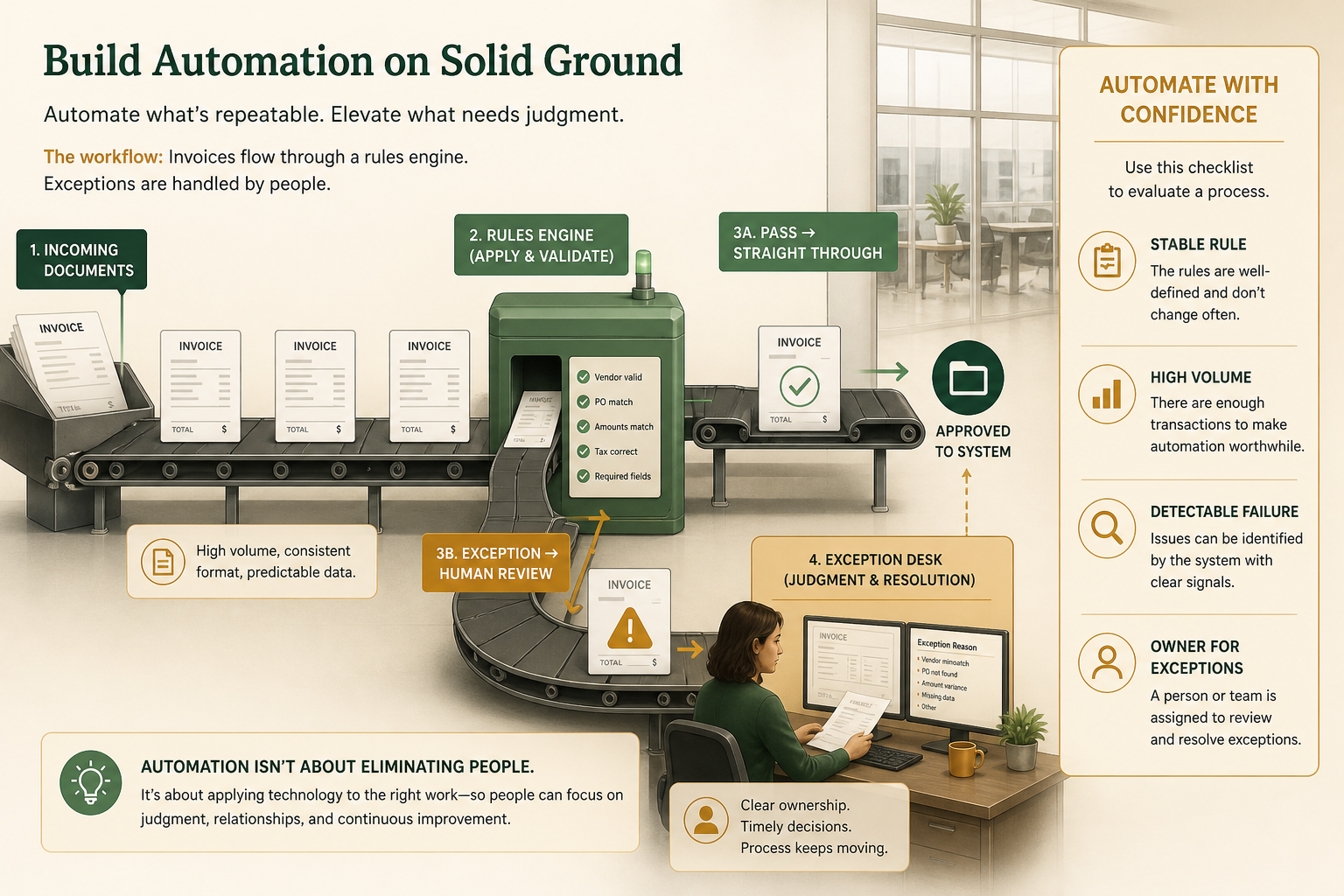
Productivity is output per unit of attention. Automation helps when it takes a step that is frequent, rules-based, and already correct when done by hand. It hurts when it hides exceptions that used to be caught by a person who understood the customer.
A simple test before you automate
Is this step ready?
- We can write the rule without a meeting
- Volume is high enough that the work is boring
- Failure is detectable (a queue, a report, a bounce)
- Someone owns exceptions
- We will not need a human to re-check every item “just in case”
If you are considering AI for the same jobs, read AI vs traditional software. Rules engines still beat models for deterministic finance and access control.
FAQ
Is RPA the same as automation?
RPA is one tactic: a bot clicking an old interface. Prefer APIs and proper workflows when you can. RPA is a bridge, not an architecture.
If you need software built around a real workflow — not a stack of disconnected tools — see Devzin application development or start a conversation.